English
 Español
 tiếng việt
 русский
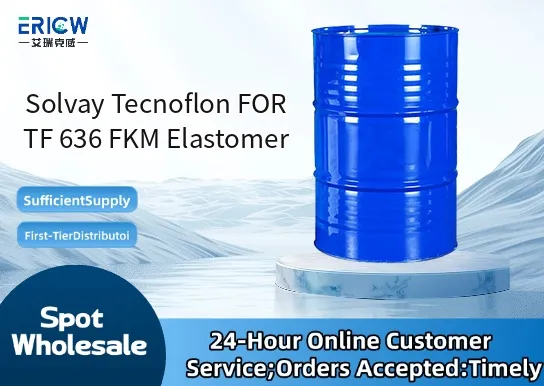
High fluorine content (~68–70 wt%) delivering exceptional resistance to aggressive chemicals and hydrocarbons.
Optimized for low-temperature flexibility with a glass transition temperature (Tg) of approximately –15 °C.
Excellent compression set resistance after prolonged exposure to elevated temperatures up to 200 °C.
Good processability in standard rubber compounding equipment, including extrusion and injection molding.
Low extractables profile, supporting compliance with FDA 21 CFR §177.2600 and EU Regulation (EU) No 10/2011 for food-contact applications.
Fuel system components in automotive and aerospace engines, including fuel rails, injectors, and seals.
Chemical processing equipment gaskets, diaphragms, and valve seats exposed to aromatic solvents and strong acids.
Oil and gas downhole tools and sealing elements operating under high-pressure, high-temperature (HPHT) conditions.
Pharmaceutical and biotech fluid handling systems requiring USP Class VI and ISO 10993-compliant elastomers.
Food and beverage processing seals where resistance to cleaning agents (CIP/SIP) and regulatory compliance are critical.
| Chemical Type | Fluoroelastomer (FKM), vinylidene fluoride–hexafluoropropylene–tetrafluoroethylene terpolymer |
| Product Form | Uncured gum stock in bale form (standard weight: ~25 kg) |
| Appearance | Light tan to pale amber, homogeneous solid elastomer |
| Primary Applications | Dynamic and static seals, gaskets, diaphragms, O-rings |
| Key Features | High fluorine content, low-temperature flexibility, low compression set |
| Benefits | Extended service life in aggressive media, reduced maintenance, regulatory compliance |
| Processing Method | Conventional rubber mixing, extrusion, compression/injection molding |
| Standard Compliance | ASTM D1418, ISO 1629, FDA 21 CFR §177.2600, EU 10/2011 |
Q1: What distinguishes Tecnoflon FOR TF 636 from other FKM elastomers in high-temperature sealing applications?
A: Tecnoflon FOR TF 636 is a fluorinated elastomer specifically engineered for enhanced thermal stability and improved resistance to aggressive automotive fluids, including modern low-viscosity engine oils and biofuel blends. Its optimized polymer architecture provides superior retention of mechanical properties after prolonged exposure to temperatures above 200 °C, making it especially suitable for turbocharger seals, fuel system components, and under-hood gasketing where long-term reliability is critical.
Q2: Is Tecnoflon FOR TF 636 compatible with standard FKM curing systems?
A: Yes — TF 636 is formulated for compatibility with conventional bisphenol- and diamine-based cure systems commonly used in FKM processing. It exhibits good scorch safety and efficient crosslink development during standard compression or injection molding cycles. Cure optimization may be required depending on compound formulation and part geometry, but no specialized curing agents are needed.
Q3: How does Tecnoflon FOR TF 636 perform in dynamic sealing applications involving repeated compression set cycling?
A: TF 636 demonstrates excellent compression set resistance under both static and dynamic conditions, particularly at elevated temperatures. Its balanced molecular weight distribution and controlled fluorine content contribute to stable elastic recovery over extended service life — a key advantage in continuously actuated valves, pump diaphragms, and reciprocating shaft seals exposed to thermal and mechanical stress.
Contact With Us:
E-mail: wangxingqiang@ericwchem.com
Have a Questions? Call Us:
Add:
Building A1, Jiete Industrial Park, Huangpu District, Guangzhou City, Guangdong Province, China