English
 Español
 tiếng việt
 русский
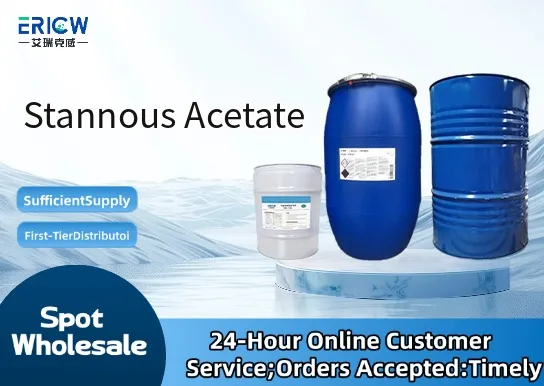
High-purity, anhydrous formulation optimized for catalytic efficiency in esterification and transesterification reactions.
Excellent solubility in common organic solvents including ethanol, methanol, and ethyl acetate.
Low volatility and thermal stability up to 180 °C under inert atmosphere.
Controlled reactivity minimizes side reactions such as oxidation or discoloration in sensitive formulations.
Manufactured under strict GMP-aligned conditions with full traceability and batch-specific CoA.
Catalyst in the synthesis of polyesters and alkyd resins for high-performance coatings.
Stabilizer and catalyst in PVC heat stabilization systems, particularly for transparent applications.
Key component in pharmaceutical-grade gelatin capsule manufacturing for controlled crosslinking.
Accelerator in silicone-based RTV (room-temperature vulcanizing) sealants and adhesives.
Reaction promoter in the preparation of metal–organic frameworks (MOFs) and tin-containing nanomaterials.
| Chemical Type | Organotin(II) carboxylate — Sn(CH₃COO)₂ |
| Product Form | Free-flowing white to off-white crystalline powder |
| Appearance | Crystalline solid; homogeneous granular texture |
| Melting Point | Decomposes above 160 °C (no sharp melting point) |
| Primary Applications | Catalysis, polymer stabilization, pharmaceutical excipient |
| Key Features | Anhydrous, low residual moisture (<0.5% w/w), high tin content (~37% Sn by ICP-OES) |
| Benefits | Reduced catalyst loading vs. stannous oxide; improved process reproducibility |
| Regulatory Compliance | REACH registered; compliant with USP <846> for tin content testing; non-REACH SVHC listed |
| Common Compatible Systems | Suitability |
| Polyester resin systems (e.g., unsaturated polyester) | Highly Recommended – Excellent dispersion and catalytic activity without gelation risk |
| PVC plastisols and organosol formulations | Recommended – Effective at 0.05–0.2 phr; requires inert handling to prevent oxidation |
| Ethanol/water-based pharmaceutical coating suspensions | Suitable – Stable in pH 4.5–6.5 range; compatible with HPMC and PVP binders |
| Silicone elastomer base polymers (α,ω-dihydroxypolydimethylsiloxane) | Highly Recommended – Rapid cure initiation at ambient temperature |
Q1: What is the CAS Registry Number for Stannous Acetate?
A: The CAS number is 301-90-8 (anhydrous form). Note that hydrated variants (e.g., dihydrate) carry different CAS numbers and exhibit reduced thermal stability.
Q2: What is the typical usage level in polyester synthesis?
A: Standard dosage ranges from 50 to 200 ppm tin (equivalent to ~0.014–0.054 wt% Stannous Acetate), depending on acid value, temperature profile, and desired reaction time.
Q3: How does Stannous Acetate compare to Dibutyltin Dilaurate (DBTDL) in terms of regulatory acceptance?
A: Stannous Acetate is not classified as a reproductive toxin under CLP/GHS and is exempt from EU Biocidal Products Regulation (BPR) authorization for catalytic use—unlike DBTDL, which faces increasing restrictions in consumer-facing applications.
Q4: Is Stannous Acetate subject to migration limits in food-contact polymers?
A: Yes — under EU Regulation (EC) No 10/2011, the specific migration limit (SML) for tin is 60 mg/kg food simulant. Stannous Acetate must be fully reacted and residual levels validated via EN 13130-1 testing prior to food-contact approval.
Contact With Us:
E-mail: wangxingqiang@ericwchem.com
Have a Questions? Call Us:
Add:
Building A1, Jiete Industrial Park, Huangpu District, Guangzhou City, Guangdong Province, China