English
 Español
 tiếng việt
 русский
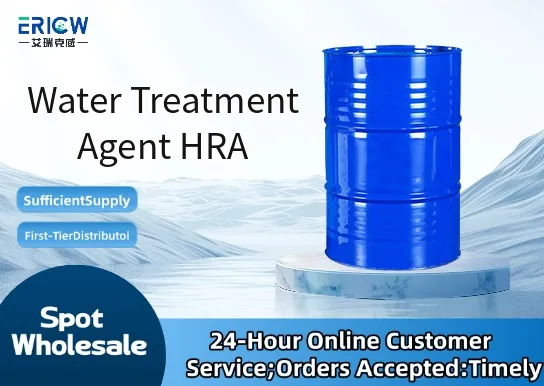
Highly effective scale and corrosion inhibitor for calcium carbonate, calcium sulfate, and iron oxide deposits.
Thermally stable up to 90 °C, maintaining performance in recirculating cooling water systems under elevated temperature conditions.
Low-phosphorus formulation compliant with increasingly stringent environmental discharge regulations.
Excellent compatibility with common biocides (e.g., isothiazolinones, DBNPA) without loss of efficacy or precipitation.
pH buffering capacity stabilizes system pH between 7.2–8.5, reducing acid feed requirements and minimizing metal corrosion.
Industrial recirculating cooling water systems in power generation plants.
Process water circuits in petrochemical refineries and chemical manufacturing facilities.
Closed-loop chilled water systems in commercial HVAC and data center infrastructure.
Once-through and low-cycle cooling applications in food & beverage processing plants.
Make-up water treatment for evaporative condensers and cooling towers operating with moderate hardness and alkalinity.
| Chemical Type | Blend of phosphonocarboxylate polymers, zinc-free organic corrosion inhibitors, and dispersants |
| Product Form | Aqueous liquid concentrate (clear to pale yellow) |
| Appearance | Clear, homogeneous liquid with mild characteristic odor |
| pH (1% aqueous solution, 25 °C) | 3.8–4.5 |
| Density (25 °C) | 1.12–1.16 g/cm³ |
| Solubility | Completely miscible with water in all proportions |
| Primary Applications | Scale inhibition, corrosion control, and suspended solids dispersion in neutral-to-alkaline cooling water systems |
| Regulatory Compliance | REACH registered; non-GHS classified for acute toxicity, skin/eye irritation, or aquatic hazards (Category 4 only); compliant with EU Biocidal Products Regulation (BPR) Annex I exclusion criteria for active substance status |
| Common Compatible Systems | Suitability |
| Open recirculating cooling towers (with side-stream filtration) | Highly Recommended – Proven performance at 3–6 cycles of concentration with typical municipal or well water sources |
| Once-through industrial process cooling systems | Recommended – Effective at low dosage (20–50 ppm as product); minimal impact on downstream wastewater treatment |
| Low-flow closed-loop chilled water systems (HVAC) | Suitable – Stable under anaerobic conditions; no microbiological nutrient contribution observed in long-term monitoring |
| Membrane pre-treatment systems (RO feed water) | Recommended – Non-precipitating with polyamide membranes when dosed ≤30 ppm; compatible with antiscalants based on polyacrylate |
Q1: What is the CAS Registry Number for Water Treatment Agent HRA?
A: Water Treatment Agent HRA is a proprietary multi-component formulation; individual components are disclosed under confidentiality agreements. The full mixture does not carry a single CAS number per IUPAC guidelines for complex reaction products. Component CAS numbers available under NDA upon technical evaluation.
Q2: What is the recommended dosage range, and how is it monitored in practice?
A: Typical dosage is 30–80 ppm (as supplied product), adjusted based on system conductivity, hardness, and thermal load. Monitoring is performed via standardized phosphonate assay (ASTM D511-22) or by tracking system performance indicators (e.g., corrosion coupon rates, deposit accumulation on heat exchanger test panels).
Q3: How does HRA differ from conventional phosphonate-based treatments in terms of environmental safety and regulatory acceptance?
A: HRA contains <5% total phosphorus (w/w), significantly lower than traditional HEDP or ATMP formulations (typically 25–45%). It avoids heavy metals (e.g., zinc, copper) and persistent chelators, resulting in higher ready biodegradability (>60% DOC removal in OECD 301D tests) and broader regulatory acceptance in EU, Canada, and Japan for discharge-limited sites.
Q4: Is there any risk of extractable or migratable components when used in potable water-adjacent systems (e.g., cooling coils near food contact surfaces)?
A: HRA is not approved for direct potable water use. However, in non-direct-contact HVAC applications (e.g., chilled water loops isolated from drinking water), migration testing per NSF/ANSI 61 Annex G showed no detectable leachables (<0.1 ppb) of active ingredients under standard conditions (7-day immersion at 40 °C, pH 8.0).
Contact With Us:
E-mail: wangxingqiang@ericwchem.com
Have a Questions? Call Us:
Add:
Building A1, Jiete Industrial Park, Huangpu District, Guangzhou City, Guangdong Province, China