English
 Español
 tiếng việt
 русский
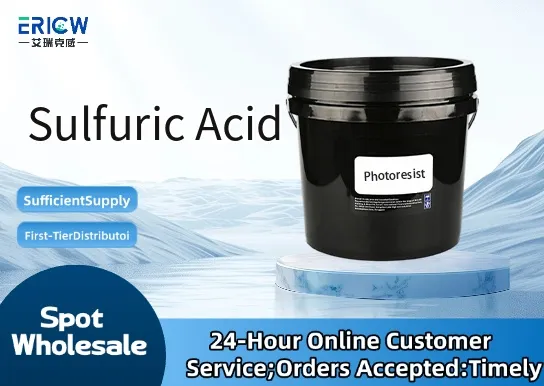
High-purity, reagent-grade formulation ensuring consistent performance in critical chemical synthesis and analytical applications.
Controlled concentration options (e.g., 95–98% w/w) with strict batch-to-batch reproducibility and trace metal impurity limits.
Corrosion-inhibited packaging in HDPE or lined carbon steel drums compliant with UN 1830 transport regulations.
Low volatility and high thermal stability under standard storage conditions (20–25°C).
Non-oxidizing at ambient temperature when concentrated, enabling selective acid-catalyzed reactions without unwanted side oxidation.
Fertilizer production — key catalyst and reactant in phosphate rock digestion for superphosphate and ammonium sulfate synthesis.
Petroleum refining — used in alkylation units to produce high-octane gasoline components.
Chemical manufacturing — essential for producing titanium dioxide (TiO₂), caprolactam, and synthetic detergents.
Electrolyte in lead-acid batteries for automotive and industrial energy storage systems.
Metal processing — employed in pickling stainless steel and carbon steel to remove oxides and scale prior to coating.
| Chemical Type | Inorganic strong acid (H₂SO₄) |
| Product Form | Liquid (aqueous solution) |
| Appearance | Clear, colorless to pale yellow oily liquid |
| Concentration (Typical) | 95–98% w/w H₂SO₄ |
| Density (at 20°C) | 1.83–1.84 g/cm³ |
| Primary Applications | Industrial catalysis, mineral processing, pH adjustment, electrolyte formulation |
| Key Features | High acidity, dehydrating capability, excellent solubilizing power for metal oxides and carbonates |
| Regulatory Compliance | REACH registered; SDS available per GHS Rev. 10; meets ASTM D129–22 for sulfur content testing |
| Common Compatible Systems | Suitability |
| Carbon steel (with corrosion allowance & flow control) | Highly Recommended – For bulk storage and transfer of >70% H₂SO₄ at ambient temperatures |
| High-density polyethylene (HDPE) tanks and piping | Highly Recommended – Suitable for concentrations up to 98% at ≤40°C |
| FRP (fiberglass-reinforced plastic) with vinyl ester resin lining | Recommended – Effective for intermediate-concentration handling and vent systems |
| 316 stainless steel | Suitable – Only for very dilute solutions (<10%) and low-temperature service; avoid in hot concentrated conditions |
Q1: What is the CAS Registry Number for sulfuric acid?
A: The CAS Registry Number for sulfuric acid is 7664-93-9.
Q2: How should sulfuric acid be diluted safely for laboratory use?
A: Always add acid slowly to cold water—not water to acid—to prevent violent exothermic splashing and steam eruption; use PPE including face shield, acid-resistant gloves, and fume hood ventilation.
Q3: Does sulfuric acid leach heavy metals from stainless steel equipment?
A: Yes—hot, concentrated sulfuric acid (>70%, >50°C) aggressively attacks passive oxide layers on stainless steels (e.g., 304/316), potentially causing iron, nickel, and chromium migration; use certified corrosion-resistant alloys or non-metallic systems for long-term contact.
Q4: Is this product compliant with FDA 21 CFR §173.350 for food-grade acidulant use?
A: No—this grade is not certified as food-grade; it meets technical and industrial specifications only. Food-contact applications require separate FDA-listed, food-grade sulfuric acid meeting USP/NF or FCC monograph requirements.
Contact With Us:
E-mail: wangxingqiang@ericwchem.com
Have a Questions? Call Us:
Add:
Building A1, Jiete Industrial Park, Huangpu District, Guangzhou City, Guangdong Province, China