English
 Español
 tiếng việt
 русский
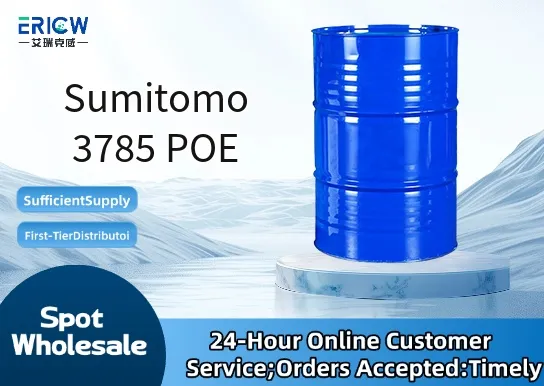
Highly stable polyolefin elastomer based on ethylene-octene copolymer architecture.
Excellent melt processability for extrusion, injection molding, and blow molding operations.
Superior low-temperature flexibility with outstanding impact resistance down to –40 °C.
Good compatibility with polypropylene (PP) and polyethylene (PE), enabling efficient blending.
Low extractables and consistent batch-to-batch performance for regulated applications.
Automotive interior trim components including door panels and instrument bezels.
Soft-touch overmolding for consumer electronics housings and appliance grips.
Toughened polypropylene compounds for under-hood automotive parts.
Flexible packaging films requiring clarity, seal integrity, and puncture resistance.
Medical tubing and fluid handling components compliant with ISO 10993 biocompatibility guidelines.
| Chemical Type | Ethylene-octene polyolefin elastomer (POE) |
| Product Form | Pellets |
| Appearance | Off-white to light tan, free-flowing cylindrical pellets |
| Primary Applications | Thermoplastic elastomer (TPE) modifier, PP/PE impact modifier, soft-touch material |
| Key Features | High elasticity, excellent flow, low density, UV-stabilized formulation |
| Benefits | Reduces part weight vs. TPEs, improves recyclability vs. thermoset elastomers, enables single-step processing |
| Density (ASTM D792) | 0.870–0.875 g/cm³ |
| Melt Flow Rate (190 °C/2.16 kg, ASTM D1238) | 2.5–3.5 g/10 min |
Q1: What is Sumitomo 3785 POE and how does it differ from conventional plasticizers?
A: Sumitomo 3785 POE is a high-purity polyolester-based synthetic plasticizer engineered for demanding elastomeric and thermoplastic applications. Unlike traditional phthalate or adipate esters, it offers enhanced thermal stability, low volatility, and superior compatibility with saturated polymers such as EPDM, HNBR, and certain TPEs.
Q2: Is Sumitomo 3785 POE suitable for use in high-temperature sealing compounds?
A: Yes — its polyolester backbone provides excellent resistance to thermal degradation and compression set retention at elevated temperatures, making it well-suited for dynamic and static seals operating continuously above 100 °C, especially in automotive and industrial environments.
Q3: How does Sumitomo 3785 POE perform in low-temperature flexibility applications?
A: It delivers good low-temperature performance with minimal stiffening effect, supporting flexible compound behavior down to –40 °C in properly formulated systems. Its molecular uniformity contributes to consistent cold-flex retention without excessive migration or exudation.
Q4: Can Sumitomo 3785 POE be used in food-contact or potable water applications?
A: Sumitomo 3785 POE is not pre-approved for direct food-contact or drinking water applications under major regulatory frameworks. Customers intending such use must conduct full regulatory evaluation and validation based on their specific formulation, processing conditions, and end-use requirements.
Contact With Us:
E-mail: wangxingqiang@ericwchem.com
Have a Questions? Call Us:
Add:
Building A1, Jiete Industrial Park, Huangpu District, Guangzhou City, Guangdong Province, China