English
 Español
 tiếng việt
 русский
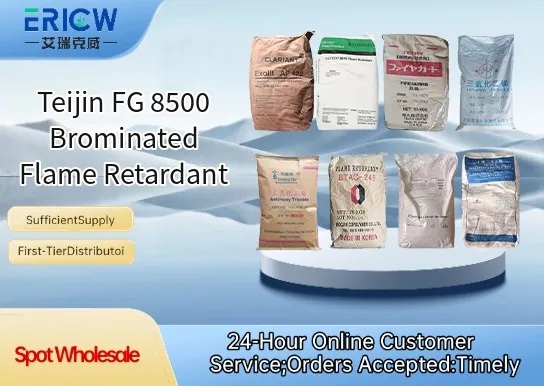
High bromine content ensuring efficient flame inhibition in thermoplastic polymers.
Excellent thermal stability suitable for processing temperatures up to 280 °C.
Low volatility and minimal migration, supporting long-term performance retention.
Good compatibility with engineering plastics including ABS, HIPS, and PC/ABS blends.
Complies with UL 94 V-0 rating at appropriate loading levels in standard test configurations.
Electrical and electronic enclosures requiring stringent fire safety compliance.
Computer and peripheral housings (e.g., monitors, keyboards, power supplies).
Consumer appliance components such as microwave oven interiors and control panels.
Office automation equipment including printers, copiers, and scanners.
Industrial control housings exposed to elevated ambient temperatures.
| Chemical Type | Polybrominated diphenyl ether (PBDE)-free brominated aromatic compound |
| Product Form | Pale yellow to light amber granules |
| Appearance | Free-flowing granular solid |
| Bromine Content (by weight) | ~78–80 wt% |
| Melting Range | 165–175 °C |
| Thermal Decomposition Onset (TGA, air) | ≥320 °C |
| Density (25 °C) | 2.1–2.2 g/cm³ |
| Primary Applications | Flame retardancy in ABS, HIPS, and PC/ABS for E&E applications |
Q1: What is the primary polymer matrix compatibility for Teijin FG 8500?
A: Teijin FG 8500 is specifically engineered for use in engineering thermoplastics, particularly polybutylene terephthalate (PBT) and polyethylene terephthalate (PET), where it delivers effective flame retardancy with good thermal stability and minimal impact on mechanical properties.
Q2: How does FG 8500 perform under high-temperature processing conditions?
A: FG 8500 exhibits excellent thermal stability, enabling compatibility with standard melt-processing methods such as injection molding and extrusion at typical PBT/PET processing temperatures, without significant decomposition or discoloration.
Q3: Is FG 8500 suitable for applications requiring UL 94 V-0 rating?
A: Yes—when formulated at appropriate loadings in compatible PBT or PET systems, FG 8500 enables achievement of UL 94 V-0 classification at standard test thicknesses, supporting compliance with key fire safety requirements for electrical and electronic components.
Q4: What is the typical dosage range for effective flame retardancy?
A: Dosage depends on the base polymer, desired performance level, and end-use requirements; however, FG 8500 is typically used at low concentrations—generally ranging from 0.1% to 2% by weight—in optimized PBT and PET formulations.
Contact With Us:
E-mail: wangxingqiang@ericwchem.com
Have a Questions? Call Us:
Add:
Building A1, Jiete Industrial Park, Huangpu District, Guangzhou City, Guangdong Province, China