English
 Español
 tiếng việt
 русский
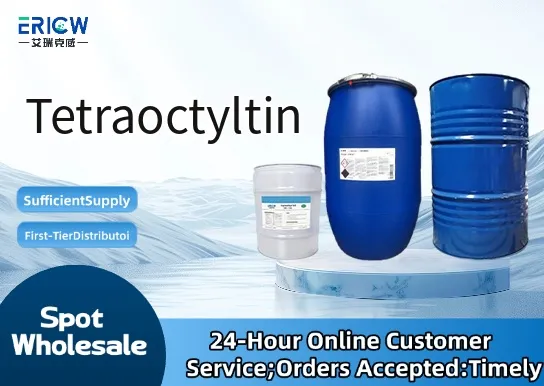
Highly hydrophobic organotin compound with exceptional thermal stability up to 200 °C.
Low volatility and negligible vapor pressure under ambient processing conditions.
Excellent compatibility with non-polar polymers and organic solvents including mineral oils and plasticizers.
Chemically inert toward common acids, bases, and oxidizing agents under standard storage conditions.
Stable shelf life (>24 months) when stored sealed under nitrogen at room temperature.
Stabilizer for polyvinyl chloride (PVC) compounds in high-temperature wire & cable formulations.
Catalyst for silicone rubber condensation-cure systems requiring low reactivity and delayed onset.
Intermediate in the synthesis of tin-based biocidal agents and specialty catalysts.
Additive in heat-resistant lubricating greases to enhance oxidative stability and metal passivation.
Functional modifier in organosilicon coatings for improved hydrophobicity and substrate adhesion.
| Chemical Type | Tetraalkyltin (organotin compound) |
| Chemical Name | Tetraoctyltin |
| CAS Number | 1461-25-2 |
| Product Form | Ambient-stable viscous liquid |
| Appearance | Colorless to pale yellow clear liquid |
| Primary Applications | PVC stabilization, silicone catalysis, specialty chemical intermediate |
| Key Features | Non-leaching, low volatility, high lipophilicity |
| Regulatory Compliance | REACH registered; not classified under CLP for acute toxicity or environmental hazards (ECHA Annex VI) |
| Common Compatible Systems | Suitability |
| Polyvinyl Chloride (PVC) resin blends | Highly Recommended – Excellent dispersion and long-term thermal stabilization without discoloration |
| Dimethyl silicone fluids (e.g., PDMS) | Recommended – Effective catalyst in RTV-2 systems with controlled cure profile |
| Mineral oil–based lubricants | Suitable – Enhances oxidation resistance without phase separation |
| Epoxy resin formulations | Suitable – Limited reactivity; used as hydrophobizing additive only |
Q1: What is the CAS number for Tetraoctyltin?
A: The CAS Registry Number for Tetraoctyltin is 1461-25-2.
Q2: What is the typical usage level in PVC stabilization applications?
A: Recommended dosage ranges from 0.2 to 0.8 phr (parts per hundred resin), depending on processing temperature and co-stabilizer synergy.
Q3: How does Tetraoctyltin compare to dibutyltin dilaurate (DBTDL) in silicone curing?
A: Tetraoctyltin offers significantly lower catalytic activity and slower, more controllable cure kinetics—ideal for thick-section or heat-sensitive assemblies where DBTDL would cause premature scorch.
Q4: Is Tetraoctyltin compliant with food-contact regulations?
A: Tetraoctyltin is not approved for direct food-contact applications under FDA 21 CFR or EU Regulation (EC) No 10/2011 due to its organotin structure and lack of migration data for food simulants.
Q5: Does Tetraoctyltin migrate from polymer matrices?
A: Migration potential is very low in non-polar matrices (e.g., PVC, silicones) due to its high molecular weight (MW = 579.6 g/mol) and lipophilicity; however, extraction testing is recommended for end-use validation under intended service conditions.
Contact With Us:
E-mail: wangxingqiang@ericwchem.com
Have a Questions? Call Us:
Add:
Building A1, Jiete Industrial Park, Huangpu District, Guangzhou City, Guangdong Province, China