English
 Español
 tiếng việt
 русский
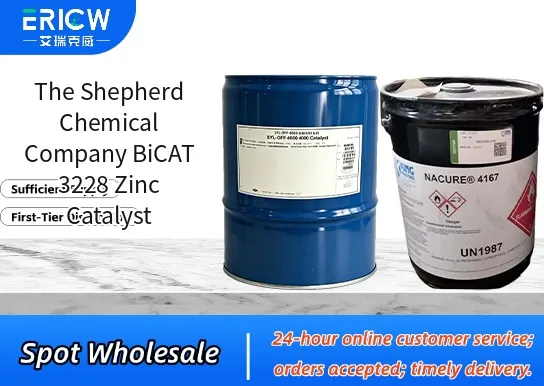
Highly active and selective zinc-based catalyst optimized for polyurethane foam production.
Excellent storage stability with minimal sedimentation or viscosity change over time.
Low odor profile, supporting compliance with indoor air quality and industrial hygiene standards.
Consistent performance across variable processing conditions, including temperature and humidity fluctuations.
Compatible with common polyol systems and co-catalysts such as tertiary amines (e.g., DABCO®).
Flexible slabstock polyurethane foam manufacturing.
Integral skin and molded PU foam for automotive seating and interior components.
Spray-applied polyurethane insulation in construction and industrial settings.
High-resilience (HR) foam formulations requiring balanced gelling and blowing activity.
Water-blown and low-VOC foam systems targeting sustainability certifications.
| Chemical Type | Zinc carboxylate complex |
| Product Form | Liquid solution |
| Appearance | Clear to slightly hazy, amber liquid |
| Zinc Content (as Zn) | 10.5–11.5 wt% |
| Specific Gravity (25°C) | 1.08–1.12 g/cm³ |
| pH (1% aqueous solution) | 6.0–7.5 |
| Primary Applications | Polyurethane flexible foam catalysis |
| Key Features | Gelling catalyst with moderate blowing activity |
Q1: What is the primary function of BiCAT 3228 in polyurethane systems?
A: BiCAT 3228 is a zinc-based catalyst designed to promote the urethane reaction (isocyanate–polyol coupling), offering balanced reactivity and extended pot life compared to highly active tertiary amine catalysts. It is commonly used in flexible and rigid foam formulations where controlled gelation and improved flow are desired.
Q2: Is BiCAT 3228 compatible with other catalysts, such as amines or tin compounds?
A: Yes, BiCAT 3228 is frequently used in combination with tertiary amines (e.g., for blowing catalysis) and/or organotin catalysts (e.g., for enhanced gelling), allowing formulators to fine-tune cure profiles. Compatibility should be verified experimentally in the target system due to potential interactions affecting storage stability or reactivity balance.
Q3: How should BiCAT 3228 be handled and stored to maintain performance?
A: BiCAT 3228 should be stored in its original sealed container under dry, cool conditions, away from moisture, strong oxidizers, and direct sunlight. Prolonged exposure to humidity may affect dispersion characteristics. Always follow standard industrial hygiene practices when handling—use appropriate PPE and ensure adequate ventilation.
Q4: Does BiCAT 3228 contribute to final product regulatory compliance, such as for food-contact or low-emission applications?
A: BiCAT 3228 is formulated without intentionally added heavy metals beyond zinc and is not classified as a restricted substance under major global frameworks like RoHS or REACH SVHC lists. However, final regulatory acceptance depends on the full formulation, processing conditions, and end-use application—formulators are responsible for validating compliance through appropriate testing and documentation.
Contact With Us:
E-mail: wangxingqiang@ericwchem.com
Have a Questions? Call Us:
Add:
Building A1, Jiete Industrial Park, Huangpu District, Guangzhou City, Guangdong Province, China