English
 Español
 tiếng việt
 русский
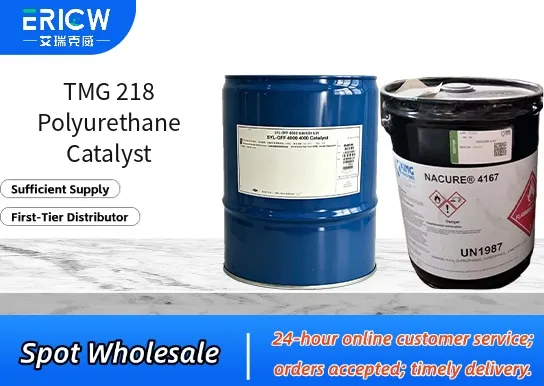
Highly selective tertiary amine catalyst optimized for polyol–isocyanate reaction kinetics.
Low volatility and minimal odor, supporting safer handling and improved workplace air quality.
Excellent compatibility with polyester and polyether polyols across diverse PU formulations.
Enables balanced reactivity—promoting gelation without excessive foaming or surface defects.
Stable in storage at ambient conditions; non-corrosive to common processing equipment.
Flexible slabstock foam for bedding and furniture manufacturing.
Automotive interior foams including seat cushions and headrests.
Integral skin foams used in steering wheels, armrests, and dash components.
Coated fabric systems requiring controlled cure profiles and surface integrity.
Reaction injection molding (RIM) and structural foam applications.
| Chemical Type | Tertiary amine catalyst |
| Product Form | Liquid |
| Appearance | Clear, pale yellow liquid |
| Primary Applications | Flexible and semi-rigid polyurethane foams |
| Key Features | Gel-focused catalysis with low blowing activity |
| Benefits | Improved cell structure uniformity and dimensional stability |
| Density (25°C) | 0.92–0.94 g/cm³ |
| Flash Point (PMCC) | ≥110°C |
Q1: What is the primary function of TMG 218 in polyurethane systems?
A: TMG 218 is a highly selective tertiary amine catalyst that promotes the urethane reaction (isocyanate–polyol coupling) with minimal acceleration of the competing urea (isocyanate–water) reaction, supporting improved processing control and reduced foam brittleness in flexible and semi-rigid foams.
Q2: Is TMG 218 suitable for low-emission or low-VOC formulations?
A: Yes — TMG 218 exhibits low volatility and high catalytic efficiency, enabling effective performance at low dosages and contributing to reduced overall amine emissions during processing and curing compared to more volatile alternatives.
Q3: How does TMG 218 compare to traditional triethylenediamine (TEDA) catalysts?
A: Unlike TEDA, TMG 218 offers enhanced selectivity for the polyol–isocyanate reaction over water–isocyanate reactions, resulting in better cream-to-gel timing control, reduced CO₂-driven cell instability, and improved dimensional stability in molded and slabstock foams.
Q4: Can TMG 218 be used in both cold-cure and hot-cure polyurethane systems?
A: Yes — TMG 218 demonstrates consistent catalytic activity across a broad temperature range and is compatible with both ambient-cure sealants/adhesives and elevated-temperature molded foam processes, though optimal performance may require formulation adjustment based on thermal profile and resin system.
Q5: What handling precautions should be observed when working with TMG 218?
A: As with other amine catalysts, TMG 218 should be handled in well-ventilated areas; skin and eye contact should be avoided, and appropriate personal protective equipment (PPE), including chemical-resistant gloves and safety goggles, is recommended during handling and dispensing.
Contact With Us:
E-mail: wangxingqiang@ericwchem.com
Have a Questions? Call Us:
Add:
Building A1, Jiete Industrial Park, Huangpu District, Guangzhou City, Guangdong Province, China