English
 Español
 tiếng việt
 русский
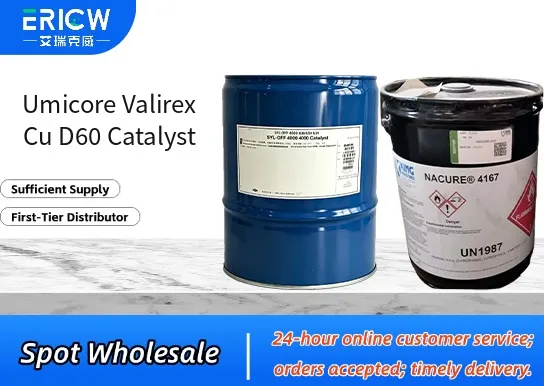
Highly selective copper-based catalyst optimized for low-temperature hydrogenation reactions.
Enhanced thermal and structural stability under continuous industrial operation conditions.
Controlled particle size distribution ensuring consistent mass transfer and reaction kinetics.
Sulfur-tolerant formulation enabling robust performance in feedstocks with trace impurities.
Designed for easy handling and safe loading into fixed-bed or slurry-phase reactors.
Selective hydrogenation of nitroaromatics to corresponding anilines in fine chemical synthesis.
Reduction of unsaturated aldehydes and ketones in pharmaceutical intermediate manufacturing.
Catalytic dechlorination of chlorinated organic compounds in environmental remediation processes.
Hydrogenation of functionalized olefins in agrochemical active ingredient production.
Conversion of alkynols to allylic alcohols with high regioselectivity in specialty polymer precursors.
| Chemical Type | Copper chromite-based heterogeneous catalyst |
| Product Form | Granular pellets (1.5–3.0 mm diameter) |
| Appearance | Black to dark gray free-flowing granules |
| Primary Applications | Selective hydrogenation, dechlorination, nitro-group reduction |
| Key Features | Low-temperature activity, sulfur tolerance, high selectivity |
| Recommended Operating Temperature | 80–180 °C |
| Pressure Range | 1–50 bar H₂ |
| Storage Conditions | Keep dry, under inert atmosphere, room temperature |
Q1: What is the primary function of Valirex Cu D60 in polymer processing?
A: Valirex Cu D60 is a copper-based catalyst designed to accelerate crosslinking reactions—particularly in peroxide-cured elastomers and thermosetting resins—enhancing cure efficiency, scorch safety, and final mechanical properties without compromising thermal stability.
Q2: Is Valirex Cu D60 compatible with common elastomeric systems such as EPDM, silicone, or fluorocarbon rubbers?
A: Yes, it demonstrates broad compatibility with saturated and unsaturated elastomers including EPDM, silicone, and certain fluoroelastomers, especially where enhanced peroxide decomposition control and reduced scorch risk are required during high-temperature processing.
Q3: How should Valirex Cu D60 be incorporated into a compound formulation?
A: It is typically added during the final mixing stage—after heat-sensitive ingredients—to ensure uniform dispersion. Dosage depends on formulation requirements but generally ranges from 0.1% to 2% by weight relative to the base polymer, with optimization recommended via small-scale cure trials.
Q4: Does Valirex Cu D60 require special handling or storage conditions?
A: As a fine, free-flowing powder, it should be stored in a cool, dry place under inert atmosphere or sealed packaging to prevent moisture uptake and oxidation. Standard industrial hygiene practices for metal-containing powders apply during handling.
Contact With Us:
E-mail: wangxingqiang@ericwchem.com
Have a Questions? Call Us:
Add:
Building A1, Jiete Industrial Park, Huangpu District, Guangzhou City, Guangdong Province, China