English
 Español
 tiếng việt
 русский
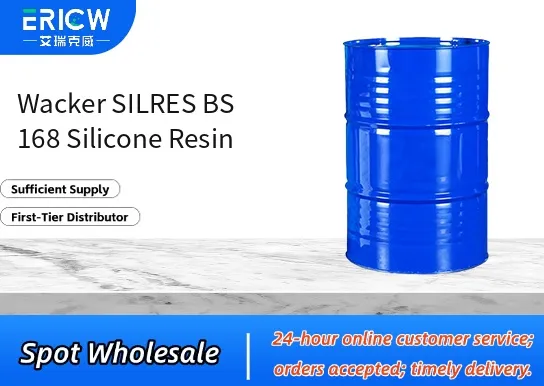
High thermal stability up to 250 °C long-term and short-term resistance to temperatures exceeding 300 °C.
Excellent weathering and UV resistance for durable outdoor performance.
Good compatibility with organic resins (e.g., acrylics, polyesters) enabling hybrid formulation development.
Low surface energy providing inherent water repellency and anti-soiling properties.
Solvent-based liquid format facilitating easy integration into conventional coating and impregnation processes.
High-performance heat-resistant coatings for industrial exhaust systems and engine components.
Weather-resistant topcoats for architectural metal façades and cladding systems.
Functional additives in silicone-modified paints and varnishes for enhanced durability.
Water-repellent impregnation agents for mineral building materials such as concrete and natural stone.
Binders in high-temperature resistant ceramic and refractory coatings.
| Chemical Type | Methyl-phenyl silicone resin |
| Product Form | Liquid, solvent-based solution |
| Appearance | Clear, pale yellow to amber liquid |
| Solvent | Xylene / aromatic hydrocarbon mixture |
| Solids Content | Approx. 60 wt.% |
| Viscosity (25 °C) | Approx. 150–250 mPa·s (Brookfield RV, spindle #3, 20 rpm) |
| Density (20 °C) | Approx. 0.94–0.97 g/cm³ |
| Flash Point (PMCC) | Approx. 45–50 °C |
Q1: What is the primary function of SILRES BS 168 in coating and paint formulations?
A: SILRES BS 168 functions as a hydrophobic, heat-resistant silicone resin additive that enhances water repellency, improves substrate wetting, and contributes to long-term durability—particularly in mineral-based systems such as silicate paints, plasters, and renders.
Q2: Is SILRES BS 168 compatible with water-based systems?
A: Yes, SILRES BS 168 is supplied as an aqueous dispersion and is specifically designed for easy incorporation into water-based mineral coatings. It exhibits good storage stability and compatibility with silicates, cementitious binders, and common rheology modifiers.
Q3: How does SILRES BS 168 affect film formation and surface properties?
A: It promotes the formation of a continuous, low-surface-energy film that imparts water beading, reduced dirt pickup, and improved resistance to weathering—without significantly compromising vapor permeability or adhesion to porous mineral substrates.
Q4: Can SILRES BS 168 be used in combination with organic polymers or hybrid binders?
A: Yes, it can be successfully integrated into hybrid systems containing acrylics or styrene-acrylic dispersions, though compatibility testing is recommended to ensure colloidal stability and performance consistency across the intended application window.
Q5: What is the typical dosage range for optimal performance?
A: Dosage is formulation-dependent but generally ranges from 0.1% to 2% by weight relative to total solids, with most mineral paint applications performing well at 0.5–1.5%—adjustments should be guided by target hydrophobicity and regulatory requirements for end-use.
Contact With Us:
E-mail: wangxingqiang@ericwchem.com
Have a Questions? Call Us:
Add:
Building A1, Jiete Industrial Park, Huangpu District, Guangzhou City, Guangdong Province, China