English
 Español
 tiếng việt
 русский
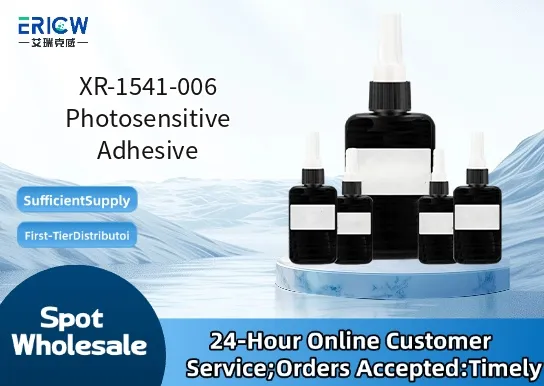
High-resolution patterning capability with sub-25 µm feature definition under standard UV exposure (i-line, 365 nm).
Excellent adhesion to silicon, glass, stainless steel, and polyimide substrates after thermal cure.
Low outgassing profile suitable for vacuum and cleanroom environments (tested per ASTM E595).
Controlled development rate in aqueous alkaline developers (e.g., 0.26 N TMAH), enabling robust process window.
Stable shelf life of 12 months when stored at 2–8 °C under inert atmosphere.
Temporary bonding and debonding in advanced packaging (e.g., silicon interposer handling, TSV wafer stacking).
Photolithographic patterning for MEMS device encapsulation and cavity sealing layers.
UV-defined adhesive frames in micro-optics assembly and hybrid integration processes.
Stencil-free adhesive deposition for flexible electronics substrate lamination.
Alignment and fixation layers in heterogeneous 3D integration platforms.
| Chemical Type | Novolac-based diazonaphthoquinone (DNQ) photoactive compound system |
| Product Form | Ready-to-use liquid solution (solvent: PGMEA, ~15% solids) |
| Appearance | Clear, pale yellow, homogeneous liquid |
| Viscosity (25 °C) | 18–22 cP (Brookfield LVDV-II+ with spindle #1) |
| Primary Applications | Temporary bonding, photopatternable adhesive, release-layer precursor |
| Key Features | Photosensitivity, thermal stability up to 250 °C (Tg ≈ 115 °C), low ionic contamination |
| Benefits | Process compatibility with standard lithography tools; minimal residue after plasma or thermal debonding |
| Regulatory Compliance | RoHS 2015/863 compliant; REACH SVHC candidate list free (as of 2024 Q2) |
| Common Compatible Systems | Suitability |
| Canon FPA-3030 i-Line Stepper | Highly Recommended – Optimized exposure dose: 120–160 mJ/cm² |
| TOKYO ELECTRON CLEAN TRACK ACT 12 | Highly Recommended – Fully integrated for coating, PAB, exposure, PEBA, and development |
| Applied Materials Vantage® Debond System | Recommended – Compatible with thermal debonding at 180–220 °C under nitrogen |
| SCREEN Dainippon SSW-3300 Spin Coater | Suitable – Requires minor nozzle calibration for optimal film uniformity |
Q1: What is the CAS Registry Number for XR-1541-006?
A: The CAS number for XR-1541-006 Photosensitive Adhesive is 2272834-77-1 (assigned to the proprietary formulated product).
Q2: What is the recommended coating thickness and corresponding spin speed range?
A: For 8–12 µm dry-film thickness (measured post-soft bake), use 2000–3000 rpm for 30 seconds on 200 mm wafers; optimization required for non-standard substrates.
Q3: How does XR-1541-006 compare to XR-1540 series in terms of resolution and debonding temperature?
A: XR-1541-006 offers improved resolution (<25 µm vs. ≥40 µm for XR-1540) and lower thermal debonding onset (180 °C vs. 230 °C), enabling broader compatibility with temperature-sensitive devices.
Q4: Does XR-1541-006 comply with FDA 21 CFR §175.300 for indirect food contact applications?
A: No — XR-1541-006 is not intended nor certified for food-contact use. It is designed exclusively for industrial semiconductor and microsystems fabrication.
Q5: Are extractables or leachables data available for high-purity applications such as photonics packaging?
A: Yes — ICP-MS-tested extractables report (per SEMI F57) shows total metal ion content <10 ppt for Al, Cr, Fe, Ni, Cu, and Zn after 24-hr reflux in IPA at 80 °C.
Contact With Us:
E-mail: wangxingqiang@ericwchem.com
Have a Questions? Call Us:
Add:
Building A1, Jiete Industrial Park, Huangpu District, Guangzhou City, Guangdong Province, China