English
 Español
 tiếng việt
 русский
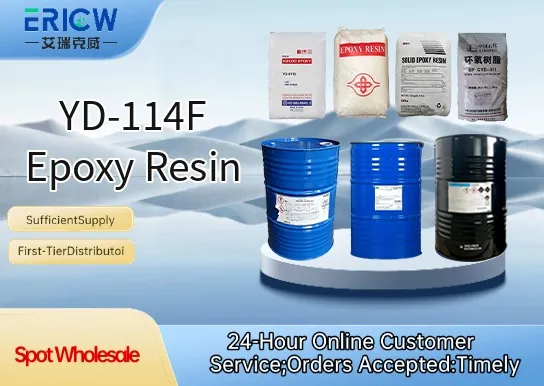
High purity bisphenol-A based liquid epoxy resin with low chlorine content.
Excellent compatibility with common amine and anhydride curing agents.
Low viscosity (12,000–14,000 cP at 25°C) enabling easy processing and impregnation.
Superior electrical insulation properties and thermal stability up to 130°C.
Consistent batch-to-batch quality meeting ISO 9001 manufacturing standards.
Electrical potting and encapsulation for transformers, reactors, and insulators.
High-voltage composite insulator housings and bushing matrices.
Structural adhesives in aerospace and wind turbine blade bonding.
Coating systems for corrosion-resistant linings in chemical storage tanks.
Prepregs and laminates for printed circuit board (PCB) substrates.
| Chemical Type | Bisphenol-A diglycidyl ether (DGEBA) |
| Product Form | Clear to pale yellow viscous liquid |
| Appearance | Homogeneous, transparent, free of gel particles or sediment |
| Epoxy Equivalent Weight (EEW) | 184–190 g/eq |
| Viscosity (25°C) | 12,000–14,000 cP |
| Chlorine Content | ≤ 750 ppm |
| Softening Point | 12–16°C |
| Storage Stability | ≥ 12 months at 20–25°C in sealed containers |
Q1: What is the primary function of YD-114F Epoxy Resin in coating and adhesive formulations?
A: YD-114F is a reactive liquid epoxy resin designed to serve as a key binder and crosslinking component, enhancing chemical resistance, adhesion strength, and thermal stability in high-performance protective coatings, structural adhesives, and composite matrices.
Q2: Is YD-114F compatible with common amine-based hardeners?
A: Yes, YD-114F exhibits good reactivity with aliphatic, cycloaliphatic, and aromatic amines, enabling flexible cure schedules — from ambient temperature to elevated temperature post-cures — depending on the selected hardener and application requirements.
Q3: How does YD-114F compare to solid epoxy resins like DGEBA in terms of processing advantages?
A: As a low-viscosity liquid resin, YD-114F offers improved handling and mixing efficiency, reduced need for solvents or reactive diluents, and better wetting of fillers and reinforcements — making it particularly suitable for solvent-free or low-VOC formulations and high-solids applications.
Q4: Can YD-114F be used in electrical encapsulation or potting compounds?
A: Yes, its low ionic impurity content and excellent dielectric properties make YD-114F well-suited for electrical insulation applications, including encapsulation of electronic components, where long-term reliability under thermal and humidity stress is critical.
Contact With Us:
E-mail: wangxingqiang@ericwchem.com
Have a Questions? Call Us:
Add:
Building A1, Jiete Industrial Park, Huangpu District, Guangzhou City, Guangdong Province, China