English
 Español
 tiếng việt
 русский
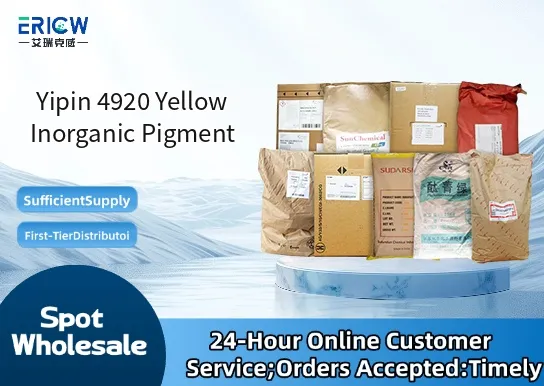
Excellent thermal stability up to 700°C, suitable for high-temperature processing.
High opacity and strong tinting strength with consistent chromatic performance.
Outstanding lightfastness and weather resistance, meeting ISO 105-B02 Class 7–8.
Non-toxic and heavy-metal-free formulation compliant with EN 71-3 and RoHS directives.
Good dispersibility in aqueous and solvent-based systems without requiring complex surfactants.
Ceramic glazes and underglaze decorations for tableware and architectural tiles.
High-performance industrial coatings for automotive refinish and coil coating.
Plastic coloration for polyolefins, engineering resins, and masterbatch applications.
Construction materials including concrete, stucco, and terrazzo pigmentation.
Specialty inks for packaging gravure and flexographic printing on heat-resistant substrates.
| Chemical Type | Complex metal oxide (lead-free mixed-phase iron-zinc chromite) |
| Product Form | Fine dry powder |
| Appearance | Yellow to yellow-brown free-flowing powder |
| Primary Particle Size (D50) | 0.8–1.2 µm (by laser diffraction) |
| Bulk Density | 2.4–2.6 g/cm³ |
| pH (10% aqueous slurry) | 6.5–7.5 |
| Volatile Content (105°C, 2h) | ≤0.5 wt% |
| Heavy Metals (Pb, Cd, Hg, Cr⁶⁺) | Below detection limit per EN 71-3 |
Q1: What are the primary application areas for Yipin 4920?
A: Yipin 4920 is widely used in industrial coatings, construction materials (e.g., architectural paints and concrete colorants), plastics for outdoor applications, and ceramic glazes—where excellent lightfastness, thermal stability, and chemical resistance are required.
Q2: Is Yipin 4920 suitable for food-contact or pharmaceutical applications?
A: No—Yipin 4920 is formulated for industrial and decorative uses only. It is not certified for direct food contact, pharmaceutical, or cosmetic applications, and does not comply with regulatory requirements for those sectors.
Q3: How does Yipin 4920 perform under high-temperature processing conditions?
A: Yipin 4920 exhibits strong thermal stability and retains its color integrity during standard plastic compounding and ceramic firing processes. It is compatible with processing temperatures commonly encountered in polyolefins, engineering thermoplastics, and medium-temperature glaze firing.
Q4: What dispersion methods are recommended for optimal performance in liquid systems?
A: For coatings and inks, high-shear mixing or bead milling is recommended to achieve full deagglomeration and uniform distribution. Pre-wetting with compatible solvents or dispersing agents enhances stabilization and reduces viscosity buildup.
Q5: Can Yipin 4920 be mixed with other inorganic pigments without adverse interactions?
A: Yes—Yipin 4920 is chemically inert under typical formulation conditions and shows good compatibility with common iron oxides, chromium oxides, and titanium dioxide. However, compatibility testing in final formulations is always advised to confirm color consistency and stability.
Contact With Us:
E-mail: wangxingqiang@ericwchem.com
Have a Questions? Call Us:
Add:
Building A1, Jiete Industrial Park, Huangpu District, Guangzhou City, Guangdong Province, China