English
 Español
 tiếng việt
 русский
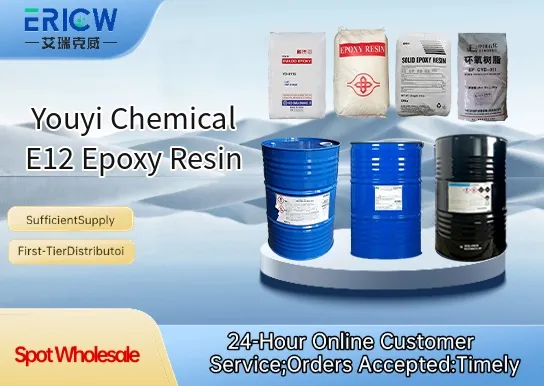
High epoxy equivalent weight (EEW) of 1,800–1,950 g/eq, enabling excellent flexibility and impact resistance in cured systems.
Low viscosity at room temperature (8,000–12,000 cP @ 25°C), facilitating easy processing, mixing, and impregnation.
Superior thermal stability with glass transition temperature (Tg) up to 135°C after full curing with standard amine hardeners.
Excellent adhesion to metals, composites, and fiber-reinforced substrates without mandatory surface priming.
Consistent batch-to-batch reproducibility meeting ISO 9001-certified manufacturing controls.
Structural adhesives for automotive assembly and aerospace bonding.
Matrix resin in filament-wound composite pressure vessels and piping.
Electrical encapsulation and potting compounds for high-voltage insulation components.
High-performance coating binders for corrosion-resistant industrial tank linings.
Tooling resins for low-expansion, dimensionally stable mold fabrication.
| Chemical Type | Bisphenol-A based liquid epoxy resin |
| Product Form | Clear to pale yellow viscous liquid |
| Appearance | Transparent, homogeneous, free from gel particles or sediment |
| Epoxy Equivalent Weight (EEW) | 1,800–1,950 g/eq |
| Viscosity (25°C) | 8,000–12,000 cP |
| Chloride Content | ≤ 500 ppm |
| Volatile Matter | ≤ 0.3 wt% |
| Storage Stability | ≥ 12 months at ≤ 25°C in unopened original packaging |
Q1: What is the typical molecular weight range of Youyi Chemical E12 Epoxy Resin?
A: Youyi Chemical E12 is a solid bisphenol-A based epoxy resin with a medium molecular weight, generally falling within the conventional range for standard-grade industrial epoxy resins—suitable for balancing reactivity, melt viscosity, and cured film performance.
Q2: Is E12 compatible with common amine and anhydride curing agents?
A: Yes, E12 exhibits good compatibility with widely used aliphatic and aromatic amines, as well as cyclic anhydrides. Its epoxy equivalent weight supports predictable stoichiometric formulation and consistent gel time control under standard processing conditions.
Q3: How does E12 perform in powder coating applications?
A: E12 is frequently selected for thermosetting powder coatings due to its balanced melt flow, low volatility during extrusion, and ability to deliver good mechanical properties and chemical resistance in the cured film—especially when paired with appropriate hardeners and flow modifiers.
Q4: Can E12 be used in electrical encapsulation or potting compounds?
A: Yes, E12 is suitable for electrical insulation applications where moderate thermal stability, low moisture absorption, and reliable dielectric strength are required. Formulations typically include fillers and flame retardants to meet end-use performance targets.
Contact With Us:
E-mail: wangxingqiang@ericwchem.com
Have a Questions? Call Us:
Add:
Building A1, Jiete Industrial Park, Huangpu District, Guangzhou City, Guangdong Province, China