English
 Español
 tiếng việt
 русский
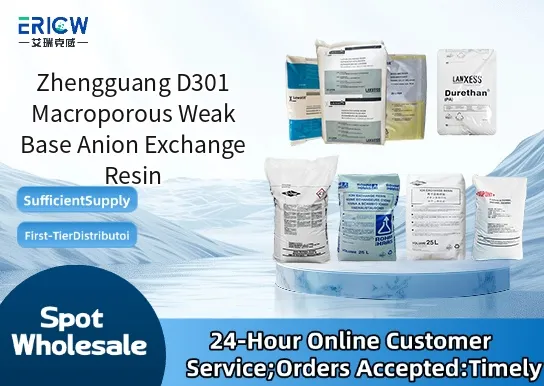
Macroporous structure ensures high mechanical strength and excellent resistance to osmotic shock during repeated regeneration cycles.
Weak base functional groups (tertiary amine) provide superior selectivity for strong acid anions (e.g., Cl⁻, SO₄²⁻) with efficient regeneration using mild alkali solutions.
Low water content and high porosity enable rapid mass transfer and enhanced kinetics in dynamic column operations.
Chemically stable in acidic environments (pH 0–14), making it suitable for pretreatment of highly acidic process streams.
Low pressure drop characteristics support high-flow-rate applications without channeling or bed compaction.
Decolorization and dechlorination of sugar syrups and sweeteners in the food & beverage industry.
Removal of nitrate and sulfate from industrial wastewater prior to discharge or reuse.
Pretreatment of feedwater for mixed-bed demineralizers in power plant boiler make-up systems.
Recovery of valuable acids (e.g., HCl, H₂SO₄) from metal finishing rinse waters.
Polishing step in pharmaceutical water purification systems to reduce total organic carbon (TOC) and ionic impurities.
| Chemical Type | Macroporous weak base anion exchange resin with tertiary amine functional groups |
| Product Form | Moist, spherical beads |
| Appearance | Light yellow to amber, uniform spherical particles |
| Functional Group | –N(CH₃)₂ (dimethylamino) |
| Matrix Structure | Crosslinked polystyrene-divinylbenzene (PS-DVB) |
| Particle Size Range | 0.3–1.25 mm (≥95% retained on 16 mesh, passes 60 mesh) |
| Moisture Content | 48–55% (as shipped) |
| Maximum Operating Temperature | 100°C |
Q1: What distinguishes D301 from strong base anion exchange resins?
A: D301 is a macroporous weak base resin with tertiary amine functional groups, offering high selectivity for strong acids (e.g., HCl, H₂SO₄) and excellent regeneration efficiency with mild alkalis like sodium carbonate or ammonia—unlike strong base resins, it does not retain weakly ionized species such as silicic acid or carbon dioxide, making it especially suitable for decolorization and acid recovery applications.
Q2: In which industrial processes is D301 most commonly applied?
A: D301 is widely used in pharmaceutical wastewater treatment, sugar decolorization, organic acid purification (e.g., citric, tartaric), catalyst recovery in fine chemical synthesis, and removal of acidic impurities from solvent streams—its macroporous structure provides superior kinetic performance and fouling resistance in non-aqueous or viscous media.
Q3: How should D301 be stored and handled to maintain performance?
A: Store in original sealed packaging at room temperature, away from direct sunlight and oxidizing agents. Avoid prolonged exposure to air when wet, as partial dehydration may affect swelling behavior. Prior to use, rinse thoroughly with deionized water or appropriate solvent to remove residual manufacturing agents and ensure full hydration.
Q4: Can D301 be regenerated multiple times without significant capacity loss?
A: Yes—D301 exhibits excellent chemical and mechanical stability under standard regeneration protocols. With proper backwashing, acid/alkali treatment, and rinsing, it typically maintains over 90% of its initial exchange capacity after dozens of cycles in well-controlled systems, particularly when operated within recommended pH and temperature ranges.
Contact With Us:
E-mail: wangxingqiang@ericwchem.com
Have a Questions? Call Us:
Add:
Building A1, Jiete Industrial Park, Huangpu District, Guangzhou City, Guangdong Province, China