English
 Español
 tiếng việt
 русский
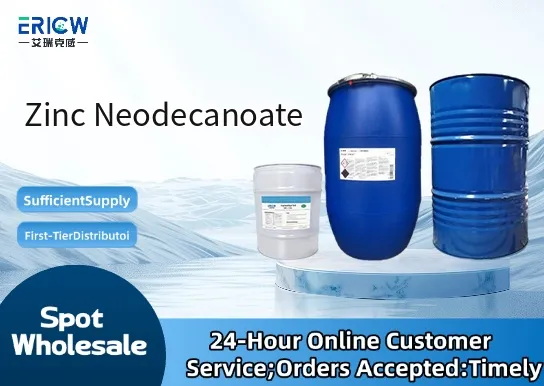
Highly effective metal-based catalyst for polyurethane foam formation, offering rapid and controllable reactivity.
Excellent solubility in common organic solvents (e.g., xylene, VM&P naphtha, esters) and polyol blends.
Low volatility and superior thermal stability compared to traditional zinc carboxylates, minimizing processing emissions.
Non-hygroscopic and chemically stable under ambient storage conditions, ensuring long shelf life.
Provides balanced gelling and blowing catalysis without excessive post-cure shrinkage or surface defects.
Flexible slabstock polyurethane foam manufacturing (mattress, cushioning).
Integral skin and reaction injection molding (RIM) systems requiring precise cell structure control.
Catalyst component in moisture-cured polyurethane sealants and adhesives.
Co-catalyst with tertiary amines (e.g., DABCO® 33-LV) in high-resilience (HR) foam formulations.
Stabilizing agent in certain UV-curable acrylate coatings and hybrid resin systems.
| Chemical Type | Zinc salt of neodecanoic acid (branched C10 carboxylate) |
| Product Form | Clear to pale yellow liquid |
| Appearance | Homogeneous, free from sediment or cloudiness |
| Active Zinc Content | 9.0 – 10.5 wt% |
| Acid Value (mg KOH/g) | ≤ 2.0 |
| Density (25°C) | 0.92 – 0.96 g/cm³ |
| Solubility | Miscible with aromatic hydrocarbons, ketones, esters, and polyether/polyester polyols |
| Regulatory Compliance | REACH registered; compliant with EU RoHS 2015/863 (Excl. Annex XVII restrictions on Zn compounds); not classified as hazardous per GHS Rev. 10 |
| Common Compatible Systems | Suitability |
| Polyether Polyols (e.g., sucrose-initiated, glycerol-initiated) | Highly Recommended – Excellent miscibility and catalytic synergy with amine co-catalysts |
| Polyester Polyols (aromatic/aliphatic) | Recommended – Stable dispersion; may require slight pre-blending for optimal homogeneity |
| Aromatic Isocyanates (MDI, TDI) | Highly Recommended – No adverse side reactions; enhances crosslinking efficiency |
| Waterborne Polyurethane Dispersions (PUDs) | Suitable – Limited use at low dosage (<0.05 phr); requires compatibility testing for colloidal stability |
Q1: What is the CAS Number for Zinc Neodecanoate?
A: The CAS Registry Number is 27253-29-8.
Q2: What is the typical usage level in flexible PU foam formulations?
A: Standard dosage ranges from 0.02 to 0.15 parts per hundred parts polyol (phr), depending on desired cream-to-gel time and final foam density.
Q3: How does Zinc Neodecanoate compare to Zinc Octoate in performance?
A: Zinc Neodecanoate offers significantly lower volatility, higher hydrolytic stability, and reduced odor versus Zinc Octoate—making it preferred for low-emission and high-temperature processing applications.
Q4: Is Zinc Neodecanoate compliant with food-contact regulations (e.g., FDA 21 CFR)?
A: It is not approved for direct food-contact applications under FDA 21 CFR §175.300 or §177.1350; intended solely for industrial polyurethane systems with no intended migration into food or pharmaceutical products.
Q5: Does Zinc Neodecanoate exhibit extractable zinc in humid or aqueous environments?
A: Under neutral pH and ambient conditions, leaching is negligible; however, prolonged exposure to acidic or highly alkaline media may promote slow zinc ion release—formulations for outdoor or wet-use applications should include hydrolysis stabilizers.
Contact With Us:
E-mail: wangxingqiang@ericwchem.com
Have a Questions? Call Us:
Add:
Building A1, Jiete Industrial Park, Huangpu District, Guangzhou City, Guangdong Province, China